Building Predictability into Oral Conscious Sedation: A Practical Clinical Framework
 Sedation and Anesthesia Education
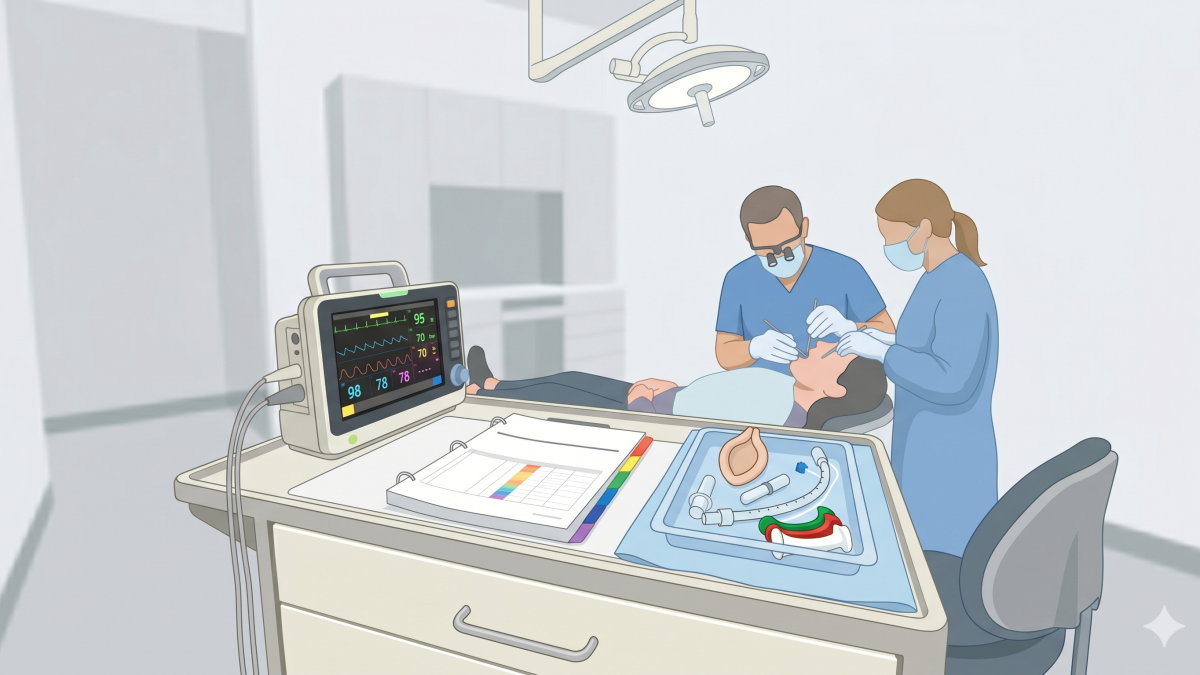
For dental practitioners utilizing minimal and moderate sedation, the ideal clinical outcome is straightforward: an uncomplicated procedure, a comfortable patient, and a predictable transition back to baseline. However, achieving this level of consistency requires much more than simply selecting a medication and calculating a dosage. Safe and effective oral conscious sedation depends entirely on a comprehensive approach that bridges pre-operative evaluation, real-world behavioral guidance, and meticulous intra-operative monitoring.
Understanding how patient physiology, clinical screening tools, and behavioral dynamics interact allows dental teams to mitigate risks and elevate the standard of patient safety.
The Critical Role of Pre-Sedation Screening
Every predictable sedation outcome is engineered during the initial patient evaluation. Relying solely on a written medical history form completed by a parent or guardian often introduces clinical blind spots. Patients and caregivers are not always precise history givers; they may omit critical medications due to a lack of awareness regarding potential drug interactions, or because of perceived social stigmas surrounding certain therapies.
A rigorous physical assessment on the day of the procedure is non-negotiable. Practitioners must evaluate real-time physiological indicators to accurately determine the patient's physical status.
Airway and Physiological Classification
A thorough airway evaluation serves as the primary line of defense against respiratory compromise. Utilizing standardized classification systems provides an objective framework for assessing risk:
- Mallampati Classification: Assessing the visibility of the oral pharyngeal structures (palatoseoglossal pillars, uvula, and soft palate) when the patient extends the tongue. Higher scores indicate an increased potential for airway obstruction.
- Brodsky Classification: Quantifying tonsillar hypertrophy. Class 3 and Class 4 scores—where tonsils occupy more than 50% of the airway or touch completely—signal a significantly elevated risk of anatomical obstruction under sedation.
- ASA Physical Status Classification: Restricting in-office moderate sedation to ASA 1 (normal, healthy) and ASA 2 (mild systemic disease, well-controlled) patients keeps clinical outcomes within safe boundaries. Patients presenting with uncontrolled systemic conditions automatically fall into higher risk categories, making an office-based sedative inappropriate.
In addition to visual tracking, direct clinical evaluation via chest excursions and the auscultation of breath sounds is essential. Dental teams must be trained to recognize normal bronchial sounds and immediately differentiate them from abnormal presentations such as crackles, rhonchi, wheezing, or stridor. Any audible indicators of airway inflammation or lower respiratory congestion warrant postponing the procedure to guarantee patient safety.
Integrating Behavior Guidance with Pharmacology
Oral conscious sedation is defined as a minimally depressed level of consciousness where the patient retains the ability to maintain an independent airway and respond purposefully to physical stimulation or verbal commands. It is not an alternative to behavior management; rather, pharmacology and behavior guidance work synergistically.
Sedative medications help blunt a heightened response to environmental stimuli, which in turn enhances the efficacy of traditional communicative techniques.
Clinical Behavior Techniques
Practitioners should seamlessly integrate proven behavior modification strategies throughout the appointments:
- Tell-Show-Do: Introducing clinical instruments—such as saliva evacuation systems or isolation devices—in a non-threatening, step-by-step manner reduces surprise and anticipatory anxiety.
- Positive Reinforcement: Explicitly praising specific, desired behaviors (e.g., "I appreciate how still you are holding your hands") guides the patient toward continued cooperation.
- Distraction: Utilizing non-pharmacological adjuncts, such as noise-canceling headphones or video entertainment, helps patients segment the clinical experience and maintain a steady state of relaxation.
Accurately charting baseline behavior utilizing tools like the Frankl Scale helps the practitioner forecast patient responses. When a patient’s anxiety or emotional maturity creates a barrier to basic communication, a minimal, single-drug protocol may prove insufficient, necessitating a transition to moderate sedation techniques or alternative care pathways.
Managing the Sedation Continuum and Monitoring Requirements
Sedation exists on a fluid continuum. A patient can easily drift from a minimal or moderate state into a deeper, unintended level of depressed consciousness where protective airway reflexes are diminished. Maintaining patient safety requires continuous intra-operative monitoring and time-oriented documentation.
Strategic Monitoring Protocols
To ensure maximum clinical control, implementing a rigid monitoring standard across all sedation levels—including minimal sedation protocols—is a prudent practice.
- Oxygenation: Continuous pulse oximetry for early detection of hypoxia and tracking oxygen saturation levels.
- Ventilation: Monitoring chest excursions or using a pre-cordial stethoscope to verify continuous air movement and ensure immediate identification of airway obstruction.
- Circulation: Automated blood pressure cuffs monitored at intervals of ten minutes or less to assess cardiovascular stability.
- Arousal Level: Continuous verbal and tactile verification to ensure the patient remains responsive and has not drifted into deep sedation.
Implementing Emergency Preparedness Checklist: "SOAP ME"
To optimize office safety protocols, every sedation setup should be verified against a comprehensive checklist prior to administering any sedative agent:
- S (Suction): Size-appropriate suction tips and functioning apparatus immediately available chairside.
- O (Oxygen): Adequate primary and backup oxygen supplies, functioning flow meters, and a positive-pressure delivery device (e.g., bag-valve-mask).
- A (Airway): Size-appropriate airway equipment, including nasopharyngeal and oropharyngeal airways.
- P (Pharmacy): All essential emergency medications, alongside calculated, weight-specific emergency and reversal drug dosages (such as flumazenil and naloxone) documented on the patient's chart.
- M (Monitors): Functioning pulse oximeters, blood pressure cuffs, and capped alarms.
- E (Equipment): Specialized emergency gear, including a fully charged Automated External Defibrillator (AED).
Conclusion: Engineering Predictable Outcomes
Predictability in conscious sedation is never accidental. It is the direct result of systematic patient selection, precise pre-operative assessments, and a highly trained dental team capable of interpreting physiological shifts in real time. By adhering strictly to established anatomical guidelines, utilizing proactive behavior management, and maintaining an uncompromised standard of intra-operative monitoring, clinicians can reliably deliver high-quality dental care while upholding the highest parameters of patient safety.
For dental professionals seeking further excellence in sedation protocols and continuing education that aligns with structural state mandates, comprehensive training resources are available through the Institute for Dental Sedation Safety at https://www.isedatesafe.com.