Understanding Minimal and Moderate Oral Sedation: Practical Guidance for Safe Dental Practice
 Sedation and Anesthesia Education
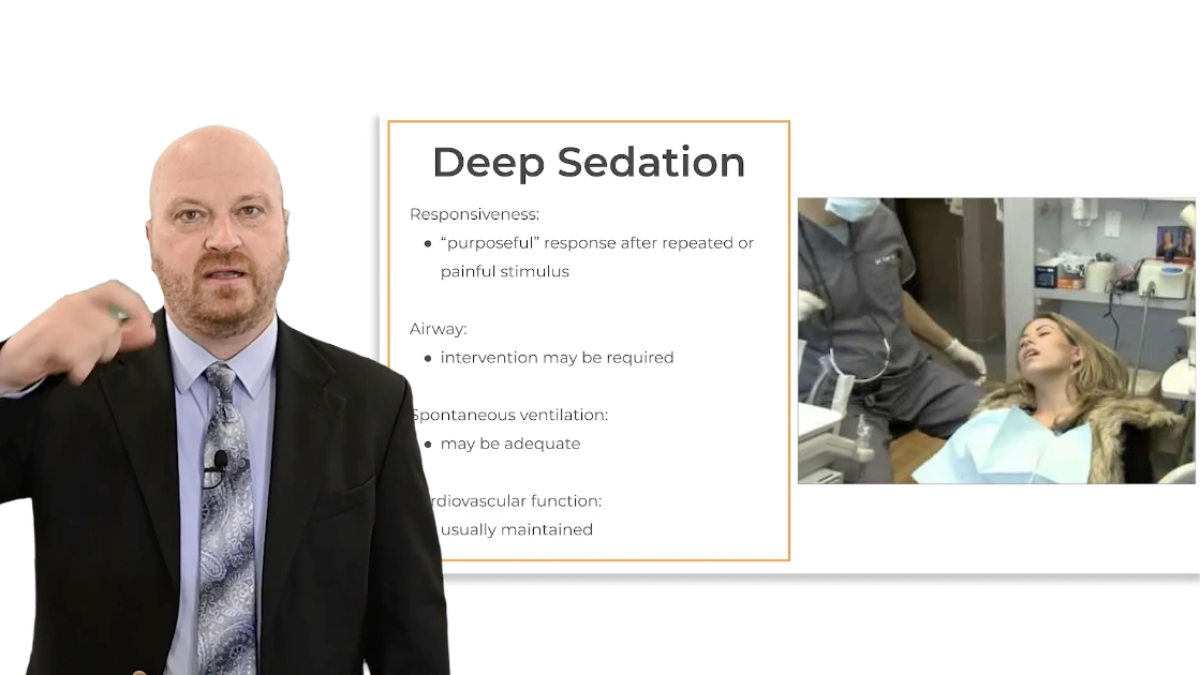
Minimal and moderate oral sedation remain two of the most valuable tools available to dental providers for improving patient comfort while maintaining safety. But effective sedation isn’t just about choosing the right drug—it’s about understanding the sedation continuum, patient selection, physiology, and preparation protocols that support predictable outcomes.
A safe sedation case begins long before any medication is administered.
The Sedation Continuum Is Always Moving
Sedation exists on a continuum with four recognized levels:
- Minimal sedation
- Moderate sedation
- Deep sedation
- General anesthesia
Patients can move between these levels more easily than many clinicians expect. Even when the intention is minimal or moderate sedation, individuals may drift deeper depending on their physiology, medications, anxiety level, and response to treatment. Because of this variability, clinicians must continuously evaluate responsiveness, airway status, and ventilation.
Minimal sedation is defined by normal response to verbal stimulation, with airway reflexes, spontaneous ventilation, and cardiovascular function unaffected. Moderate sedation involves a purposeful response to verbal or tactile stimulation, with airway and breathing typically maintained independently.
Deep sedation and general anesthesia represent a different risk profile altogether. These levels involve decreased responsiveness and a higher likelihood of airway intervention. Recognizing when a patient transitions beyond the intended level is one of the most important responsibilities in office-based sedation.
Why Patient Selection Determines Success
One of the most common causes of sedation complications is inappropriate patient selection.
For minimal and moderate sedation, the safest candidates are generally:
- ASA I patients (healthy individuals)
- ASA II patients (mild systemic disease, well controlled)
Patients classified as ASA III or higher present significantly increased risk during sedation because medication interactions and reduced physiologic reserve can accelerate deterioration if airway compromise or respiratory depression occurs.
Sedation success improves dramatically when clinicians commit to treating only appropriate candidates within their permit level and training. Patient selection is not simply a checklist item—it is a primary safety intervention.
Setting Expectations Improves Patient Cooperation
Many sedation challenges begin with misunderstanding.
When patients hear the word “sedation,” they often assume they will be asleep. Minimal and moderate sedation, however, are designed to keep patients comfortable but responsive. If expectations are not clarified beforehand, confusion during treatment can increase anxiety and reduce cooperation.
Patients should understand:
- what sedation will feel like
- that they will remain awake
- what to do if they feel uncomfortable
- how to communicate concerns during treatment
Clear pre-operative communication improves both patient confidence and clinical workflow.
Nitrous Oxide: Predictable and Titration-Friendly
Nitrous oxide remains one of the safest and most useful sedation agents in dentistry because of its rapid onset and rapid recovery profile. Its low blood solubility allows clinicians to titrate sedation levels quickly and adjust treatment in real time.
Clinical effects typically begin within minutes, and recovery often occurs within five minutes after discontinuation.
However, clinicians should always remember the possibility of diffusion hypoxia following nitrous oxide administration. Delivering 100% oxygen for several minutes at the conclusion of treatment helps prevent this complication and supports safe recovery.
Even with a predictable agent like nitrous oxide, patient response varies significantly. Sedation depth is determined by physiology—not dosage alone.
Benzodiazepines: Reliable Anxiety Control With Important Considerations
Benzodiazepines remain a cornerstone of minimal and moderate sedation because they provide:
- anxiolysis
- sedation
- anterograde amnesia
- mild muscle relaxation
- anticonvulsant effects
Short-acting agents are generally preferred in office-based sedation settings because they allow more predictable recovery timing and easier titration.
Clinicians must still evaluate hepatic metabolism, drug interactions, and patient age when selecting benzodiazepines. These medications are metabolized through hepatic enzyme systems, and interactions with other medications can prolong sedation unexpectedly.
As with all sedation drugs, individualized dosing is essential. A standardized approach increases risk.
Opioids Require Extra Caution
While opioids provide analgesia and can deepen sedation effects, they introduce additional respiratory risk—especially when combined with benzodiazepines.
Synergistic drug interactions mean that combined effects may exceed expectations. Even moderate dosing can produce unintended respiratory depression if patient variability is not considered carefully.
For many minimal and moderate sedation cases, nitrous oxide combined with a benzodiazepine provides sufficient anxiolysis without the added complexity of opioid use.
Careful drug selection supports predictable outcomes.
NPO Guidelines Protect Against Unexpected Sedation Depth
Because patients may unintentionally move deeper along the sedation continuum, pre-operative fasting recommendations remain relevant—even when moderate sedation is planned.
Typical guidance includes:
- clear liquids allowed up to 2 hours before treatment
- light meals allowed up to 6 hours before treatment
- fatty meals avoided for at least 8 hours prior
Following these precautions reduces aspiration risk if sedation depth increases unexpectedly during treatment.
Reversal Agents Support Emergency Preparedness
Even well-planned sedation cases require preparation for unexpected outcomes.
Two essential reversal agents include:
Flumazenil Used to reverse benzodiazepine over-sedation.
Naloxone Used to reverse opioid-related respiratory depression.
Because both medications have shorter half-lives than many sedative agents, patients must remain under observation after administration to monitor for re-sedation.
Emergency preparedness is not optional in sedation dentistry—it is part of routine clinical readiness.
Sedation Success Starts With Clinical Judgment
Minimal and moderate sedation improve patient comfort, reduce anxiety, and support treatment acceptance. But safe sedation depends less on medication choice and more on clinical awareness.
Successful providers consistently:
- recognize movement along the sedation continuum
- select appropriate ASA candidates
- communicate expectations clearly
- titrate medications carefully
- prepare for rescue if sedation deepens unexpectedly
Sedation works best when it is individualized—not standardized.
Understanding these principles helps clinicians maintain both safety and predictability in everyday practice.
Learn more at: https://www.isedatesafe.com
Categories: : Patient Safety, Sedation Anesthesia